
When the Exit Goes WrongWith Vince Nardo of Master Roofing Solutions and TimeProof USA
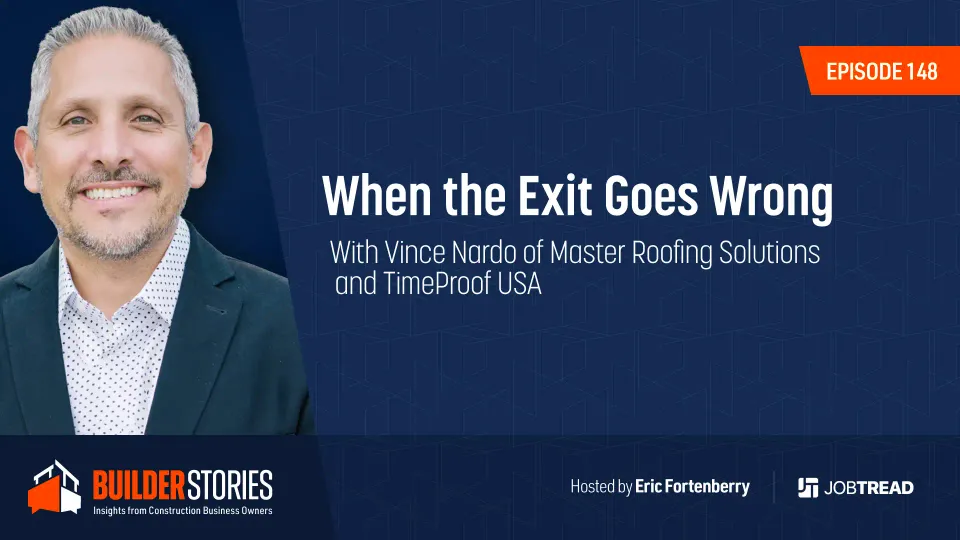

Vince Nardo helped grow his family’s cabinet refacing shop into the largest home improvement company on the West Coast with 700 employees. The company operated in multiple states and even landed a partnership with Costco to sell their products. In 2022, he sold the business to private equity firm Audax. Two years later, the acquiring company went bankrupt and the 40-year legacy the Nardo family built was gone. Now Vince is out of retirement and building a national roofing brand from scratch, and he’s sharing every hard lesson along the way.
In this episode you will learn:
- The simple metrics Vince used ensure growth of a 700-person company
- Why Reborn stopped thinking of itself as a sales and marketing company, and what it became instead
- How a meeting in Seattle turned into a partnership with Costco, and what selling under a retail giant taught his team
- The one question Vince says every contractor must ask before selling to private equity
- What convinced him to bet on himself again after losing everything he spent decades building
Listen to the episode to learn more.
Resources:
Learn more about Vince here.
Eric Fortenberry: [00:00:00] Welcome to the podcast where we take a deep dive into the stories behind construction business leaders. We will share how they got started, how they found success, and the lessons learned along the way. I’m your host, Eric Fortenberry. Welcome to Builder Stories
Eric Fortenberry: Welcome back everybody. Today I’ve got a very special guest. We’ve got Vince Nardo with us today. He is currently the CEO of Master Roofing Solutions as well as Timeproof USA, uh, but he’s also got a tremendous amount of experience. Uh, before that he was with, uh, Reborn Cabinets, you know, working, working on that for, for many years, ended up having a very successful exit.
Eric Fortenberry: Uh, so excited to, to hear his story and, uh, what lessons he’s got for us. So welcome to Builder Stories, Vince.
Vince Nardo: Thanks Eric. Glad to be here. Thanks for the opportunity.
Eric Fortenberry: Yeah. Uh, appreciate you taking the time. So why don’t you give us, give us a little background. You know, kind of tell us h- how’d you get into construction in the first place, you know- Yeah
Eric Fortenberry: what, what led you to, to Reborn and, and then [00:01:00] ultimately to, uh, to, to roofing?
Vince Nardo: So, um, when I was in high school my parents had started a little tiny cabinet company here in California called Reborn Cabinets. And, um, it started to grow. It started in 1987 or 1983 and it was starting to grow. It was really one-- my dad and one other person, and I watched the business starting to mature.
Vince Nardo: So I, I went to college for a little while and then when I g- when I was in college, uh, watching the business grow I was like, “My dad’s gonna need someone he can trust in the business.” You know, just like any startup, you know, you always rely on one or two people and you’re like, they’re the whole, they’re the whole thing of my...
Vince Nardo: My business evolves around those two people, and when one of those person leaves you feel like you’re left stranded. So it was an opportunity for me to come in and just, you know, come alongside my mom and my dad and, and have an opportunity to, to grow a business, something that honestly I never was interested in being in.
Vince Nardo: You know, I didn’t think of construction as my, uh, my life.
Eric Fortenberry: Sure. And, and so this was, uh, pr- pretty early on then. And so it sounds like, you know, what, what kind of led [00:02:00] to, to you guys taking over and what, what would you say were the, the biggest challenges?
Vince Nardo: Yeah, so I joined, I joined, um, say a few years out, out of high school.
Vince Nardo: I think it was probably like ’89 or something like that. And then later on my brother joined, so my brother and I both worked there. I only have one other sibling. And we kinda looked at the business over the very many years, and it was growing and, you know, the general rule of thumb is you do a good job, you grow the business.
Vince Nardo: So it grew naturally. But then we looked at the business probably 15, maybe 20 years ago from then, or probably about 15 years ago, and we said, “We have an opportunity to really take this business to the next level.” You know, I had a f- quite a few kids, my brother had quite a few kids, and we’re like, “Hey, man, if we wanna really provide this future for our families, we have to grow this business.”
Vince Nardo: You know, doing $5, 10, $15 million a year is just not gonna support as many families who are in this business. Yeah. So we really sat down and made a plan to really press the accelerator and, and take the business to the next level. And [00:03:00] that’s kinda what led us to the, you know, later on to be able to successfully exit the business.
Eric Fortenberry: Yeah. So I’m, I’m curious to, to learn. Let’s kinda drill in a little bit more. Yeah. Like, what, what sort of strategies, you know, did, did, did you feel like you needed to implement that, you know, again, may- maybe, maybe your dad wasn’t doing, that, you know, you and your brother came in? Like, what, what changes?
Eric Fortenberry: Are we talking about, you know, kind of people, you know, processes, systems-
Vince Nardo: Yeah ...
Eric Fortenberry: culture?
Vince Nardo: So, so the first thing that started with was, was systems and process. And most businesses that are grown up from the ground up grow through, um, uh, what do you wanna say? But they grow without systems, right? They grow through tri- tribal knowledge.
Eric Fortenberry: Yeah.
Vince Nardo: And everybody just kinda knows how the cake is made, right? Grandma passed it down. You know, my mom made it. Now I’m making it. And if you told me how I made it, I have no idea. I just know what to do. And we realized that you can’t- create a stable, growing business on tribal knowledge. You have to be able to [00:04:00] create a repeatable business with systems and processes that can be hand down and taught to everybody that comes into the business so that you can ensure that you have consistent results.
Vince Nardo: So the first thing we, we did was we set out to really document and systematize every single aspect of the business so that also we could hand our parts off, right? If this is how the coffee was made, I wanted someone to have a process to know how they can make the coffee so I didn’t have to go show everybody how to make the coffee.
Vince Nardo: So that was really step one, was go through and, and it was hard, right? These are-- We’re talking about pre-AI days, right? Pre-- I mean, literally, I wrote my first CRM on our Apple II Plus, so we’re going way back, right? But it, it was just getting all that stuff documented, put down, and then also using those systems to give us a baseline for when something didn’t work.
Vince Nardo: So we would always refer back to that process and say, “Where was the gap? Was it an understanding of the process? Was it a process break, or is it w- or what, where exactly did [00:05:00] we go wrong?” So it gave us that baseline to really improve things on. And then once we spent, you know, a lot of time doing that, ’cause what a lot of people f- know is that when you’re growing a business, you don’t generally have the time to work on the business.
Vince Nardo: So after we, you know, were growing and, and gathering time to work on it, we then said, “Okay, now we have this business. It’s stable. It’s repeatable. Everybody’s, everything’s documented. Now what’s next?” And so we really just sat down and said, “If we could look at this business and say, ’This is what the business looked like when it was done,’ how do we get there?”
Vince Nardo: And that’s literally what we did, was we just set out a five-year goal, and we said, “This is where we wanna get.” We didn’t, at that point really didn’t think about selling the business. It was just more we wanted to have the business worth a certain amount of money and provide our families with a certain amount of, um, flexibility and, and freedom.
Vince Nardo: And we said, “Let’s, let’s do everything we can over the next period of time to get from where we are now to get there.” Sure. [00:06:00] And then everything was just a matter of planning and strategy and strategic decisions to that end.
Eric Fortenberry: So how did you-- You know, I mean, to, to kinda go from, you know, just few of you guys to, you know, 700 employees, you know, you, you, you must’ve been a, a serious, you know, sales and marketing machine.
Eric Fortenberry: You know- Yeah ... were, were there, were there certain kind of, you know, KPIs and metrics that, that, that, that you were looking at? And like, how’d you kinda decide, you know, what were the most important metrics that you needed to measure and, and hone in on, you know, for, for each of the different aspects of the business?
Vince Nardo: Yeah, and, and, um, so we definitely started out as a sales and marketing machine, right? I think when people would always ask me what you’d, what I did for a living, and I said I, I generate leads and know how to sell, sell stuff, right? That’s what I did. Um, it just happened to be that we were in the kitchen and bath space at that time.
Vince Nardo: Um, so if we really break-- The nice thing about our business is it’s actually very simple You know, you have to generate a lead, you have to set an [00:07:00] appointment, you have to convert it into an issued appointment, you have to send someone out to the home, you have to sell it, and then you have to retain it, right?
Vince Nardo: Not have it cancel out. And then after that, you have to produce it, install it, and collect the final payment. And in simplistic terms, that’s the business. So it was all around creating those KPIs or those key performance indicators that said are we on track or off track at any one of those areas. And then taking those things down steps below that and say, okay, if we wanna have, you know, if we wanna generate raw leads and set so many appointments, what are the f- at...
Vince Nardo: Let’s just throw a number out, 50%. So if we want 50% of our raw leads to s- convert to set appointments, what actions need to exist to make that happen, and what are the lower performance indicators on those actions, right? Um, maybe one action is I gotta get a raw lead and I gotta send out a text campaign.
Vince Nardo: Well, let’s measure that, right? How many text c- how many texts have to go out? How many [00:08:00] res- um, opens do we have to have? How many responses do we have to have? So everything was really just around the smallest component of metric measurement and then 100% accountability, and making sure that everybody that owned an area of that business understood those metrics, understood how their compensation was tied to those metrics, and then making sure that everybody’s reporting on them on a regular basis.
Vince Nardo: We developed all these different KPIs that we needed within the business, and really about, you know, at each phase of the business, what KPI was required to reach our target goal of how we wanted the business to perform, and then taking those KPIs and breaking them down into the smallest increments. You know, what actions needed to be take place, and then holding everybody accountable to those actions, making sure that their position commitments, their comp plans, everything tied to that performance, and then ultimately making sure that everybody reported on those metrics upward through the business at a regular period of time so we knew if [00:09:00] and where there was a gap, what we needed to do to correct it.
Eric Fortenberry: Sure. What, what was it like, you know, uh, I guess kind of in the early days, like how, how much kind of sort of management structure did you end up needing to put in place and kinda like, you know, walk us through. I mean, you know, I, I gotta imagine, you know, going from, you know, 10 people to, you know, 50 to 100 to- Yeah
Eric Fortenberry: you know, a couple hundred to 500 to 700, I mean, like that, that, you know, that is an enormous organization of people. Yeah. And, and, and, and, you know, I think, you know, I mean, JobTread’s the biggest company that I’ve run. We’ve got, you know, about 75 people, but like I know- ... as you add more and more people, you know, you, you, you get kind of some, some challenges with that many people.
Eric Fortenberry: Yeah. So how did... You know, kind of what did that, what did that look like, and how did you go about kind of maintaining that size of an organization?
Vince Nardo: So there’s one thing I kinda also realized in business with that growth of people is the business kinda grows and plateaus, and grows and plateaus. And every one of those-- And the plateaus can be different for every business, but it gets to like you, you know, you press to get to this, this [00:10:00] plateau and everything runs smooth.
Vince Nardo: And then you’re like, “I gotta press to this next plateau, and I gotta change things.” And then I get up there and like everything runs smooth. So, and that kinda coincides also with the addition of a lot of staff. So every area or every plateau we went to to get to the next, the business had to change. And the business might have changed from, you know, I did three things to now I do one, and now I have three people doing three things, to more people.
Vince Nardo: And ultimately, where we ended up was we no longer really were a sales and marketing company. We actually became a people development company. Hmm. You know? And how could we develop the people into our business to be the leaders that we wanna do, wanted to have? Um, so It really is all about levels of management and, and org structure, and making sure that nobody was ever over their skis, that they could always handle what they had reporting to them, and that we always made sure that we didn’t wanna [00:11:00] overburden a person with too many direct reports.
Vince Nardo: So we, whenever we got to a certain level where, you know, we wouldn’t want a manager to have 20 people reporting to them, we would add levels below that or add levels above that to spread it out.
Eric Fortenberry: Hmm.
Vince Nardo: So it, it started to make the, the org structure multi-layered. You know, where we might have had before a, um, you know, a sales manager with, uh, six sales r- you know, reps or 12 sales reps, and then we had two sales managers with 12, and then we had 12 sales managers, so then we needed to have a sales director, and then we had, you know, 12 sales directors, so now we need a VP of sales.
Vince Nardo: Maybe we were spread out across a broader region, so we had to insert regionals in there. So it was just really thinking through how do we keep the org structure as wide as possible rather than just letting it keep growing upward, and that’s kinda how we looked at it, you know? And then making sure that we had strong people in human capital [00:12:00] management, if you will, right, or human development or human resources, to teach people how to manage successfully.
Vince Nardo: Sure. And so we spent a lot of effort on classes on training people how to manage. You know, how to pick the right people on their team, how to understand the different personalities, how to, you know, effectively coach and discipline when needed. And so we had to put a lot of effort just around that to maintain that amount of people.
Eric Fortenberry: Yeah. No, that’s, uh, ma- makes a lot of sense. And it’s, it’s interesting that you kind of started thinking about yourself instead of like a sales and marketing organization. It was a, it was a people development.
Vince Nardo: Yep.
Eric Fortenberry: Uh, ma- makes a lot of sense when you got that many people. And so how, how w- you know, you guys obviously went from, you know, regional to, to national.
Eric Fortenberry: You know, what, what did that look like and, and, and what challenges did you see kind of trying to break into new markets, and how’d you pick where to focus on?
Vince Nardo: So the first one we picked was easy, because we picked one that we knew we could drive to if something didn’t work. Right? That really [00:13:00] literally was the decision.
Vince Nardo: Yeah. We said, “Listen, we’re gonna open up our first satellite. Let’s make sure we could get there. It doesn’t require a plane. It doesn’t require hours on the road.” So we picked, you know, we were in Southern California, we picked Nevada, Las Vegas, right? Three and a half hours. We could solve anything in three and a half hours, you know?
Vince Nardo: And, and that allowed us to really press and develop those systems, ’cause we, we quickly learned that, well, shoot, they’re shipping the wr- the stuff that needs to go to Nevada to California. That’s a problem, right? So we gotta start fixing the processes. So we used that as a way to iron out the wrinkles, and then once that got established, then we stretched it farther.
Vince Nardo: Um- And that’s kind of how we thought about it. And, and the, the biggest challenge, I think, was making sure that any office we opened had the culture of the business that we wanted.
Eric Fortenberry: Hmm.
Vince Nardo: And so we had the best success, and we kind of leaned into always wanting to recruit, to build a new region or branch with a plant from someone from another branch that [00:14:00] already kind of understood the culture of the business and took that with them.
Vince Nardo: Um, and that was very important. And, and I think, you know, we, we realized, you know, we set out, again, when we, when we looked at re- rebuilding the business, you know, 15 or so years ago, we really started with our core value, and we, um, values, and we realized that our, in our business, our number one core value was to build a winning team, because we realized that our people were our greatest asset.
Vince Nardo: It wasn’t the product. It, it wasn’t the customer. It was really the people, and if we didn’t focus everything on the people, we would never accomplish what we needed to accomplish.
Eric Fortenberry: Yeah. I, I, I love that. I, I feel like, you know, again, people, people are everything, you know? Yeah. And when people, you know, and, and, and, and businesses can focus on, you know, the, the people, the culture, you know, I mean, it’s, it’s, it’s...
Eric Fortenberry: You know, do you want your people coming in every day excited and passionate, or do you want them- Right ... you know, dreading work and looking at this like a, you know, “I’m punching in and punching out,” you know? I think it’s really important to, to unlock someone’s potential. You gotta focus on building a great place that they [00:15:00] wanna come into.
Vince Nardo: And that takes a lot of work because the f- unfortunate thing about business is we tend to always only focus on the broken parts.
Eric Fortenberry: Yeah. Yeah.
Vince Nardo: Right? And we’re, and, and because we expect it to work. We s- we don’t expect it not to work. And so when it doesn’t work, it’s what we’re constantly focusing on, and it’s very easy to lose track of the positives and only work on the negatives, so you really gotta put a lot of effort.
Vince Nardo: We c- we actually, you know, we thought of it as, like, it’s internal marketing, right? We have our external marketing we do to generate leads, and we have to do our internal marketing with our people to continue to continually market to them-
Eric Fortenberry: Hmm ...
Vince Nardo: about why they work there and, you know, what’s going on in the business.
Vince Nardo: So there was... It wasn’t as much, obviously, as much effort as lead gen, but there really was a marketing effort to internally market to the people.
Eric Fortenberry: Yeah. That’s interesting. What, what would you, uh... You know, c- c- maybe can you shed a little light on, like, what, what did your, you know, your interview, your hiring, you know, what did that whole process look like to make sure that you brought on the right people that were gonna be a good fit with the culture?[00:16:00]
Vince Nardo: So we did a lot of training on that, and we, you know, we kinda landed on that we wanted people that were, you know, capable of doing the job, they were hungry for the job, but they shared the general, um, culture of us, which was, you know, we, while we were a family business or a family-- I like to call it a family with a business, but because we had that kinda family atmosphere, we wanted people to kinda have that understanding and, and wanna be a part of that.
Vince Nardo: And so we kinda looked at... They, they didn’t necessarily have to know how to do the job. They just had to have a willingness to wanna learn to do the job, and they had to culturally fit, and that was more important than anything, was a cultural fit. That was key.
Eric Fortenberry: Yeah. Yeah. Makes a lot of sense. So, uh, my understanding is you, you, you landed a hu- a huge deal.
Eric Fortenberry: You, you got into Costco. Um, I’m curious, how, how did that deal happen and, you know, what, what did you guys, you know, learn from, from, from working with, you know, such a [00:17:00] large, uh, retailer and h- how did they, you know, how did they impact your business?
Vince Nardo: So we’ve always been involved in, in what we call, you know, S- SF&I programs or sold, furnished, and installed programs, whether it was with Costco or Walmart or, you know, Sam’s Club or Home Depot or whatever, Lowe’s.
Vince Nardo: Um, but we had an, I had an opportunity to go up to Seattle to talk to Costco to be a d- as a dealer for another program. And, um, during that visit, I was, you know, talking to them and, and what, what made u- Reborn Cabinets a little unique was that we were also a manufacturer, so we manufactured all of our own products for the, on the cabinet side, not the bath side.
Vince Nardo: So when I was up there, I had an opportunity. I’m like, “Guys, listen, you know, this is a, a, a, a very fragmented space,” blah, blah, blah, “and, and I think it’s an opportunity for you guys to really anchor in where a lot of the other retailers are failing.” So what it... So we got that opportunity to do a pilot, obviously got an opportunity to ex- to exceed past the pilot, and I think what it really taught us as a business was it [00:18:00] upped our game in, um, the level of service that we were offering.
Vince Nardo: Now, we were good already. I won’t say that we were bad, but when you’re dealing with a retailer, you’re second to them, and those retail brands, while they might share and you might share as a business your same, um, customer-focused, um, result, you really want the customer to have a happy result. When you’re a retailer, it’s, it’s even more...
Vince Nardo: A, a major retailer, it’s even more under the microscope, right? That customer expects even a higher level of service, and you as a, as a brand working under a retailer have to remember that, you know, you’re second to them, and so it allowed us to really hone and improve even what we already were doing good to really make it great.
Eric Fortenberry: Yeah. Yeah, that makes a lot of sense. What do you, what do you think that you guys did really good? You know, what, what did you do right with sales and marketing, and, and what do you feel like most remodelers, they, they struggle with and they never [00:19:00] get figured out?
Vince Nardo: Yeah. I- You know, I think, I think most remodelers really just s- suffer with holding themselves and their teams accountable to their plan.
Eric Fortenberry: Hmm.
Vince Nardo: You know, I talk to a lot of people a lot, obviously, and, and, um, the common theme I, I hear is-- the common thing I hear is they don’t really have that defined, totally defined plan, that model that says, you know, “We-- this is what we have to do,” right? It’s easy to say, I got, like we said earlier, raw set, you know, issued net sale retain.
Vince Nardo: But to really, uh, really take it down as deep as they can, and really then hold the entire thing we do on the sales and marketing side to that performance. And then, um, and pivoting quick. You know, we’re constantly... You know, I, I have a very good CMO that worked with me at Reborn, now works with me at this new business, and constantly, you know, she’s running pacing [00:20:00] reports and pivoting and turning things off and turning things on on a daily basis.
Vince Nardo: It’s, it’s a full-time, um, analyzation going on about what’s, what’s going on. But I think a lot of these guys don’t know what to expect, so then they don’t know when to pivot.
Eric Fortenberry: Hmm.
Vince Nardo: Because they run with best intentions, but not really with a defined plan
Eric Fortenberry: Yeah, I mean, I, I speak to, to, to contractors all the time and, and, and, and I, and I love asking the question, “So do you have an annual budget?”
Vince Nardo: Right.
Eric Fortenberry: Do you have a monthly budget? Do you have goals? You know, are, are you hitting those goals? Like what are your, what are the main drivers of, of, of those goals?” You know, and, and, and, and so many times they, they don’t.
Vince Nardo: Yeah.
Eric Fortenberry: And it’s just like, “Well, why not?” And they’re like, “Well, I don’t know where to start.”
Vince Nardo: Yeah.
Eric Fortenberry: You know, “I’m, I don’t have an MBA. How would I know how to build a financial model? How do I know what, what I should, you know, be able to spend to, to generate that income?” And it’s like, you know, like I, I just, I see that all the time. So, so what advice would you give, you know, to contractors who, who say that [00:21:00] and, and, and they don’t know where to start, and they don’t think they can, they can do it, and, you know, they don’t know the value of it?
Eric Fortenberry: Like what, what would you say to them?
Vince Nardo: Well, the first thing I would say is the one thing that I really appreciate about this industry is there’s a wealth of successful people that will share their knowledge.
Eric Fortenberry: Yeah.
Vince Nardo: You know, I can honestly say, and I work at some other industries, that this industry specifically is very unique because we’re so people based, right?
Vince Nardo: Everything we do is r- is, is a, is a, a person interaction. You know, we’re not building widgets in a warehouse that we never see that ship out to another state. You know, our businesses are all around people, so that generally creates relationships that we’re people p- we’re people relationship based individuals.
Vince Nardo: So leverage that. You know, the contractors need to leverage that and need to talk to other contractors, and other... The, the big guys will share. When I was a small business, I just talked to the guys that were five times my size and said, “How, how do I [00:22:00] figure this out? How do I figure that out?” You have to be a student of success, right?
Vince Nardo: That’s in a lot of books. But you really have to take that initiative. And then the other thing is Everybody knows what... They, they really do know what metrics need to be. They’re just, they’re just hesitant to start monitoring them.
Eric Fortenberry: Hmm.
Vince Nardo: And then my advice would be pick anything. Pick any metric and just look at what you’ve been doing, look at what you are doing, and then think about how can I make it better.
Eric Fortenberry: Yeah.
Vince Nardo: And then just really focus on that. You know, I don’t care what metric it is. I don’t care if it’s, you know, um, how do we get the office carpet cleaner, right? How do... It’s dirty every three days. Well, let’s look at the metrics. She comes in once, you know, the cleaning company comes in once every few days, blah, blah, blah.
Vince Nardo: Let’s start monitoring that and seeing when it gets dirty and figure out that we gotta come in every two days instead of every three days. It’s re- literally as simple as that.
Eric Fortenberry: Yeah. So how often did you feel like you needed to kinda pivot this, this strategy? I mean, you [00:23:00] know, get, getting, you know, early on, you know, you, you, you kinda set a strategy and, and you go execute and then, you know, are, are you, are you looking at this annually?
Eric Fortenberry: Are you looking at this quarterly, monthly? Like, how, how much kind of, you know, uh, sort of these, these, these reviews and looking back and saying like, “What did, what did we do right? What did we do wrong?” Like, how regularly should, should that happen?
Vince Nardo: So we’re looking, we’re looking at it daily.
Eric Fortenberry: Daily?
Vince Nardo: Yes, daily.
Vince Nardo: We’re making decisions on pivots and movements in the business every single day. Um, they can be as minute as maybe there’s a branch that’s underperforming this week and it’s been consistently underperforming. We might have to stop spending as much marketing in that branch next week because our cost of marketing’s in jeopardy of hitting our target by the end of the month.
Eric Fortenberry: Hmm.
Vince Nardo: Right? So we’re looking at those things every single day. Um, and then we’re, and then we’re looking at it on a daily basis for daily pul- daily changes, and then we’re looking at it on a monthly basis for h- how does that impact the future. But we’re [00:24:00] trying to stay m- a few months ahead of w- where we wanna be so that we can actually not just affect next month, but affect the following month.
Eric Fortenberry: Yeah.
Vince Nardo: You know? And, and start... We wanna start getting our forecasting farther, uh, f- earlier and earlier so that we can be changing, you know, months out rather than just worrying about next month.
Eric Fortenberry: Sure. What do you, what, what do you think were your biggest challenges to, to growth?
Vince Nardo: The biggest challenges were development of people.
Eric Fortenberry: Yeah.
Vince Nardo: And really being able to take folks and quick... You know, when you’re growing a business, you know, the business I’m growing, I’m in right now that we’ve started, and we can talk about that a little bit, that thing’s been growing, you know, 50 to 100% a month.
Vince Nardo: Hmm. And so you’re talking about significant growth. Now we’re in a startup, so it, it’s expected to grow that much. But, um, really making sure that we can bring folks into the [00:25:00] business as quick, at the c- at the s- pace that we need to, and get them up to speed at the pace we need to.
Eric Fortenberry: Yeah.
Vince Nardo: So focusing a lot of efforts on that training and development so that we can...
Vince Nardo: ’Cause that’s gonna be your biggest hiccup in growing a business, is the people. Sure. You know, and having the correct number of people and the, and the, and, and the people that understand the process.
Eric Fortenberry: So before we talk about the new business, I’m, I’m, I’m, I’m very curious about, uh, you know, this, this, this, uh, you know, this exit here that, you know, is, uh, I believe 2022, you, you sold the business to Renovo.
Vince Nardo: Yep.
Eric Fortenberry: You know, what... C- can you kinda tell us, like, what, what were the decisions and, and what was sorta happening that, that, that, that led you to that point? You know, w- was there, uh, something you were trying to solve? Was it just, you know, a great opportunity to, to, to take chips off the table? Like, what, was there, was there a problem with, you know, Reborn and how you’re growing that you, you needed to, to sell to a private equity firm?
Eric Fortenberry: Like, how, how did that all sort of come to fruition? ’Cause I, I see a lot of people that, you know, they, they, they, [00:26:00] they say their goal is, is to be able to sell their business one day, but they don’t, they don’t really know, like, what’s it gonna be like, and how are we gonna make that decision, and, you know, when do you know if the time is right to, to, to exit?
Vince Nardo: Yeah. So well, obviously the, if you continue on the story, we know the, what I had hoped would’ve happened obviously did not happen, right? The absolute worst thing that could ever happen, which is bankruptcy for all the businesses, is what ended up happening. But, you know, you, we don’t have a crystal ball when we make those decisions.
Vince Nardo: But the reason the decision was made, um, and obviously if I could predict the future, I probably would’ve made it differently, but, and, and, you know, as we know, back in 20- 2019, 2020, 2021, private equity really came into the replacement contractor space, right? They’d already been playing with windows and HVAC and plumbing, but they really came into, you know, replacement contractors, kitchen, bath, and interior guys, right?
Vince Nardo: Where they never touched us before. And so when I looked at the business, now mind you, at that time [00:27:00] Reborn was very large, you know, it was n- well north of 100 and, you know, in the mid-100s. Um, very established. Largest on the West Coast. So there wasn’t... So the risk I looked at was- At some point, there’s a risk or a threat of a private equity firm coming in and needing to s- needing to take my markets away from me.
Eric Fortenberry: Hmm.
Vince Nardo: And when you’re a f- when you’re a family-run business, that’s my family’s money, future, houses, my kids, my grandkids. That all crashes down, right? We don’t... There’s, there’s no, like, it’s not like we have, you know, $50 million in the bank that we can weather any storm. You know, this w- it’s a family-run business.
Vince Nardo: You know? Yeah. We’re all in. So I looked at it and I said, “Okay, these guys are all coming into play in our space. How does that, what risk does that put against the business? How, how hard does the business become if a private equity firm comes into California and our f- the states we’re in and says, ’You know, I’m just gonna throw [00:28:00] $40 million at the problem and, and market over them.’”
Vince Nardo: So that’s kind of what made the decision, honestly, is I just looked at it and said, “You know what? If I don’t do something, I could jeopardize the, the thousand employees or 700, 800 employees that worked at Reborn’s futures, and I don’t wanna put that business at risk.” Now, granted, they all got screwed at the end of the day anyway, and I’m sorry for that ’cause I could never have expected that.
Vince Nardo: It has been terrible. I’m still dealing with the aftermath. Um, but that was the reason.
Eric Fortenberry: Yeah. Were, were you, were you promised, you know, some, uh, promised things about the business that, you know, how, how it would run or what it would be like kind of post-sale that-
Vince Nardo: Yeah, I mean- ... that
Eric Fortenberry: didn’t match reality?
Vince Nardo: I mean, you do your due diligence, right?
Vince Nardo: You try to fix the best suitor. You’re dating for a short period of time. You know, I think the people that purchased us, which was Audax, was the private equity firm, I think they had the best intentions. Um, you know, they bought seven businesses in a period of 18 months. You know, it was a [00:29:00] $600 million a year business when, when it, before it went bankrupt.
Vince Nardo: Um, so it was very large, 2,000 employees. So I think they had their very best intentions. I... They didn’t know what needed to be done to run the business.
Eric Fortenberry: Hmm.
Vince Nardo: They failed to ask the successful people in the business, which was their biggest mistake, and, you know, there’s one thing I will say, and, um, it’s very odd, but the minute I sold my business to private equity, for somehow I became an idiot in the business.
Vince Nardo: Like, I didn’t know- Yeah ... what I was doing, right? It’s like, well, you know, I built something from scratch pretty much, so I must know something. Yeah. But that’s what I think happened, and so the... There’s, there’s other private equity firms out there that don’t share that, don’t, don’t operate that way, have kept, you know, the, the, the prior owner/operators in place to help run the business.
Vince Nardo: Now, we were in place to help run the business, but we really weren’t guiding the business, so they made some very bad mistakes. Um, I also think they acquired the business during the perfect storm. Nobody anticipated interest rates to do what interest rates did [00:30:00] post-COVID, and they all bought businesses with very, very cheap money.
Vince Nardo: And when you take what happened after COVID, which we all could have predicted was a little slight decline in the business, right? You didn’t expect the COVID wave to ride forever. But when you take that slight decline, those of us that have been in the business long enough, we dump more money in the business when that happens, right?
Vince Nardo: Yeah. We’re marketing more. We’re spending more. Um, but these guys had that against them, plus a debt load that they didn’t anticipate ’cause interest rates jumped. So it was just a perfect storm. And ultimately they, you know, if you read the news, they, they lost the d- business to the senior debt lender, which was BlackRock, and BlackRock tried to keep it for, you know, 16 months or t- 12 months or so and just gave up.
Eric Fortenberry: Yeah. Was there a point in time where, you know, ’cause I mean obv- obviously with a leveraged buyout, like, I mean, did, did, did you, did you start to feel these strains, you know, from that debt structure and, and, and the rising rates, like where you, you had some visibility that, that things were, were taking a turn?
Eric Fortenberry: And how did you, how did you, [00:31:00] how did you start to sort of like, you know, rationalize what, what was happening and what needed to be done?
Vince Nardo: Well, I can tell you that None of us ever thought that a Chapter 7 was gonna ha- happen. Yeah. There was no reason that that needed to happen. I mean, I was exposed to what was going on in the business.
Vince Nardo: That, that, that was the ultimate price everybody paid for someone’s bad mistakes. Yeah. That never needed to happen. The business was not that bad. Um, but we did s- we did see, we did have exposure to what was going on. We knew what was going on in the business, and i- it’s just all about, um, risk management, right?
Vince Nardo: I think they, they didn’t want to take the risk or manage it or just deal with it. You know, um, BlackRock’s not a operating company. They’re an investment banker, right? They want to invest and want somebody else to deal with it. Um, so I think they just said, “This is too much for us to deal with.” Um, but what we saw was the general thing we see in a business, highs and lows, and, you know, you gotta, you gotta be all in all the time.
Vince Nardo: You know, this isn’t a business where you have an [00:32:00] opportunity to take your foot off the gas, and, um, I think that’s just what failed, you know. They just, they took their foot off the gas.
Eric Fortenberry: Yeah. So I, I, uh, my, my first business, uh, was a software company. We ended up selling it to a private equity firm as well.
Eric Fortenberry: Uh, they, uh, immediately they, they, they bought us. They bought our biggest competitor right after that, and, uh, you know, we, we only competed with one of our competitor’s products, so, you know, naturally they wanted to kind of put us up under- Yeah ... you know, that, that bigger company. And, uh, you know, I, uh, I was, I was, I was 23 when I started the first, this, this first business, and I think I was probably 31 or, or, or so when this, uh, when this all happened, so it was, uh...
Eric Fortenberry: It, for, you know, for me it was a very challenging, you know, thing to go through. I mean, y- you know, you kind of... All the money’s fun and everything, but then, you know, it’s like, all right, well, I gotta keep living, gotta keep working. You know, I’m, I’m, I’m excited. You know, this is exciting times, and, you know, I thought there was gonna be this, this great role and I was gonna help play this, you know, kind of help merge all these companies together.
Eric Fortenberry: And, uh, you know, it, it, it became very challenging though when, when I went from being that, you know, [00:33:00] owner, you know, entrepreneur, the, the head guy to I’m, I’m now having to report to someone, and we gotta have these weekly meetings, and, you know, we’re, we’re going over all these, you know, details. And like, you know, for, for me that, that, that kind of lost some of the fun.
Eric Fortenberry: Mm-hmm. You know? And it, and it became, you know, just like, man, like I, I knew there were a couple guys, you know, with some spreadsheets that were kind of modeling this whole thing out. And, you know, ultimately, uh, you know, I, I end up getting, getting, uh, ousted from, from my own company one year and one day after they bought it.
Eric Fortenberry: Uh, they fired me and, and, and our CFO, who was my dad. So he, he was, uh, you know, first, first person I hired in my last company and the first person in this company. And, uh- You know, uh, may- maybe not first in this one, but he, he, he was involved here as well. Uh, it, it was very challenging, though, to, to kinda make that transition.
Eric Fortenberry: And, and I think a lot of people, they, they, they, they feel like it’s, “Oh, you know, when I, when I have all this money and, you know, the grass is gonna be greener, and, like, life is gonna be, you know, even more exciting, and, and the business is gonna grow and flourish.” And like, you know, like it, it, it wasn’t that.
Vince Nardo: Yeah.
Eric Fortenberry: You know? And, and [00:34:00] it was, it was just, like, kinda very deflating and like, you know, for me, you know, ultimately after, after they ousted me, they, they, they came in and, and, and, you know, for, for a while there were like, “Oh, we’re gonna, you know, we’re gonna merge these two products together, and we’re gonna get the best of the both worlds.”
Eric Fortenberry: And, you know, they, they, they ultimately ended up saying, “Actually, uh, we’re just gonna shut yours down, you know, put it on the shelf,” you know, told all the customers they had to migrate over. They jacked up the price. You know, all my employees, you know, basically they said, you know, “You can, you know, come move to Buffalo or, or you can leave.”
Eric Fortenberry: You know, they didn’t care. I mean, they basically just gutted the whole thing, and, like, to see your baby after, like, a decade- Yeah ... you know, go through that, like, I mean, I, I gotta, you know, I’m, I’m pretty jaded, you know? I’m, I, I, I refuse to talk to private equity right now, and like, it’s, it’s, it’s, it’s something that I’m, I’m curious if you sort of had that same, like, you know, uh, experience and, and just sort of feel like, man, like, did I make the right decision, you know?
Eric Fortenberry: It, it, it, it probably worked out for both you and I personally, but like, man, like to, to see your customers, to see your employees and like-
Vince Nardo: Yeah ...
Eric Fortenberry: just the changes, like that’s, that’s so hard to stomach. And, and, and [00:35:00] again, I mean, for, for us it was, you know, it was a year later, and, you know, it’s over the next several years, you know, that, that, that, that, that the whole thing sort of, you know, got put on the shelf.
Eric Fortenberry: But like, I mean, you know, for you guys, I mean, to see hundreds and hundreds of people, you know, just basically- Yeah ... get laid off overnight, like, I mean, I can’t even imagine. Like, I mean, that, that must, that must haunt you.
Vince Nardo: Oh, it does. Um- You know, I feel my, myself, my family, we feel a, a personal responsibility for all of that that happened.
Vince Nardo: You know, while it wasn’t our responsibility and we actually had no control over any of it, um Uh, you know, some people say, you know, it was selfish. You guys sold the business. You knew what you were doing, and that’s really not the case. You know, we sold the business because we wanted the business to la- to live forever.
Eric Fortenberry: Yeah.
Vince Nardo: You know, and, and my dad did it, and you know, there’s... I don’t care what anybody says and, you know, for me to have to go tell my 90-year-old dad that the business he developed, you know, and he’s, y- that he built is gone, you know, that’s a hard conversation. Yeah. You know? And it’s [00:36:00] a business that he wanted to live on, for his legacy to live on forever, and it’s literally gone.
Vince Nardo: Um, you know, and so yeah, it’s... But I think it educated me, you know, and I’m b- I’m working with private equity again. You know, I was asked- Yes ... to come out of retirement and, um, I knew I did better vetting this time.
Eric Fortenberry: Hmm.
Vince Nardo: Right? I knew what to fi- what to find out. I knew what research to do, and, um, you know, I, and I, and I’m working for the best guy now, you know, and I, and I can tell the difference.
Eric Fortenberry: Yeah.
Vince Nardo: You know, and, and most importantly, the group I’m working with for now, from now listens, you know? And, and I don’t expect them to always do what I, what I say. I’m not, I am not the smartest guy in the room, nor do I ever wanna be the smartest guy in the room, but I at least wanna be able to offer my opinion, voice it, and be challenged, and then to talk through it, and I’ve got that in this, in this group now.
Vince Nardo: You know, I’ve got the opportunity where I can state my [00:37:00] case. It’s not like, “Hey, it’s your, my way or the highway.” It’s, it’s a, it’s a tr- it’s a relationship, and, and that’s what I, uh, really en- enjoy about the group I’m with now versus where I, uh, was before.
Eric Fortenberry: Now, are you... I mean, you’re, you’re still in control, and you’re, you’re, you’re running the company.
Eric Fortenberry: I mean, like- Yes ... do, when, when you think about kind of, you know, and, and again, many other contractors out there, you know, we, we all see, you know, private equity coming in and, and, and, and they’re, you know, trying to consolidate, and they wanna buy and roll up all these companies and, you know, the same, it’s, it’s the same playbook, right?
Eric Fortenberry: Like, I mean-
Vince Nardo: Well, our playbook’s different.
Eric Fortenberry: The, the new one, right?
Vince Nardo: Yes.
Eric Fortenberry: Yeah. So
Vince Nardo: but after- The guys I work for with today are different, yes.
Eric Fortenberry: What would you tell those, those existing businesses, though, who, who are sitting, you know, right where you sat, you know, back in 2022? Like, what advice would you give them?
Eric Fortenberry: Like, w- are, are there things that, like, you think that, you know... ’Cause, ’cause ob- you know, again, obviously this, this is a very valid, this is a great, you know, path for- Yeah ... for many people, but how do they [00:38:00] find the right people to partner with to make sure that the same thing doesn’t happen to them and their employees?
Vince Nardo: So where w- what we did not have the ability to do was to vet out the history of that private equity firm that purchased us because all the businesses that were purchased were purchased in 18 months. Hmm. So there was no historical track record in our space. They had successful track records in other spaces, but there was no, there was not another home improvement guy that had sold to him, sold to this private equity firm five years prior that I could go say, “How’s it going?”
Vince Nardo: Right? “How’s it working?” So what I would say to your listeners is, to the contractors that, you know, you, you guys talk with, is you wanna go get... You wanna talk to the guys who sold to that private equity firm already And kind of understand what’s going on in those businesses, and are they still happy, and do they like what they do?
Vince Nardo: And just do your research that way.
Eric Fortenberry: Yeah.
Vince Nardo: Um, that’s gonna be key. And there’s some very strong, [00:39:00] still strong private equity firms out there that are, that are doing, uh, you know, a lot of acquisitions in our spaces. And then also understand what’s their s- acquisition strategy. Now, there’s a lot of guys out there that do their acquisitions differently.
Vince Nardo: Um, you know, some fold them in, convert them to their, to their current brand, and the other brand goes away. Some leave all the brands independent. So you also have to think about what, what, how, how will you go to sleep at night? Are you okay with, you know, JobTread no longer being JobTread tomorrow, right?
Eric Fortenberry: No.
Vince Nardo: And everybody wears a different shirt? Or do you really want that, that legacy of, of JobTread to live on, right?
Eric Fortenberry: Yeah.
Vince Nardo: And so you’re, you’re... You have to really think that through.
Eric Fortenberry: So ha- having that, that, that industry, you know, that, that domain knowledge and expertise is, is so important. You know- Yeah
Eric Fortenberry: making sure that they’re, they’re not getting into this, this new industry, and they don’t understand the business and how things work ’cause, you know, again, from a spreadsheet, you know, things can all sort of be modeled [00:40:00] and look similar. Right. But, like, in reality, like, if they don’t understand the day-to-day and what it takes to successfully sell the product, to install the product, to, you know, to be able to kind of deliver that, that great customer experience, and that’s, that’s where they often wanna come in and, “Ah, let’s just kinda squeeze it here.
Eric Fortenberry: Let’s take away these things there.” And it’s like, you know, they, they don’t get the end-to-end kind of experience that, that, that you have built your business trying to deliver and wanna maintain. And, you know, they just see it as places to just, you know, kinda try to squeak that profit a little bit higher.
Vince Nardo: A- and this business can’t run on a spreadsheet.
Eric Fortenberry: No.
Vince Nardo: You know, while we model it on a spreadsheet, and we predict it on a spreadsheet, it’s, like we said, it’s people-based, it’s lead gen driven, and it changes very quick. And, you know, uh, the, uh, most of the private equity firms out there that have been coming don’t, don’t understand that area of the business.
Vince Nardo: They don’t, they don’t understand that, you know, if we’re gonna grow 20% next year, next month, we need to, we need to up our marketing spend this month [00:41:00] 20%, so our P&L’s gonna be upside down-
Eric Fortenberry: Yeah ...
Vince Nardo: right, this month. Because it’s all pre-spent, pre-spent expense before you grow. So while that, in theory they understand that, they have a hard time, and then as it’s going in the month and you’re seeing that maybe the metrics aren’t off, and they’re like, “Pull back spend.”
Vince Nardo: I mean, the minute you pull back marketing spend, you might as well just stop eating. You, you basically starved your business. You stopped eating food.
Eric Fortenberry: Yeah.
Vince Nardo: And that’s the first thing that’ll kill any business is, is your marketing. You never cut your marketing.
Eric Fortenberry: Yeah. Couldn’t agree more.
Vince Nardo: Yeah.
Eric Fortenberry: So you’re now running two, two different businesses.
Eric Fortenberry: You, you’ve come out of retirement. You’re, you’re, you’re working with, uh, the, the private equity again. You know, what- What changes, you know, or, kind of what, what did you look for, you know, and what, and what did you insist on, you know, when, when deciding, you know, to, to, to go run a business again? Like, what, what did you want- Yeah
Eric Fortenberry: to be different?
Vince Nardo: So this one’s very unique because I was brought into it by a friend. Um, so I’m very good friends with Mark Burch, who had started Service Finance Company and sold that [00:42:00] a few times. Um, it’s currently owned by Truist. And so he had retired. You know, through my years of knowing him a- and being friends with him, he’s always said, “Hey, Vince, we gotta do something.
Vince Nardo: We gotta do something.” I’m like, “Yeah, you know, but I got a gazillion non-competes and non-solicits and all sorts of crap. My hands are cuffed, right?” Um, ’cause that is when you do sell your business, you’ve just given up your livelihood. You’re giving up your future of what you can do, so just remember that.
Vince Nardo: Um, but so, you know, so he came to me and said, “Listen, I’m working with this company called The Walter Group, TWG Global, and, um, you know, we had purchased this, this roofing company, this direct-to-builder roofing company a few years ago, and we always wanted to grow and build a direct-to-consumer roofing company, and, you know, would you be-- do you want to let’s do it?”
Vince Nardo: And I said, “Oh, you know what? Roofing’s not in my non-compete,” so I could do roofing ’cause we weren’t doing roofing. So I said to him, I said, you know, “So we put out a, we put out a pro forma on this new business, the, the retail side,” and they said, you know, “We wanna go from here to here in this period of time.
Vince Nardo: Can you do it?” And it’s aggressive. And I said, “Sure, I can make a stab at it, but, you know, in order to [00:43:00] do this, I really need to, uh, bring in some friends because you guys wanna do na- you wanna make a national business overnight.” And so I went back to my friends that had sold their businesses, you know, and some other friends I’d worked with for a long time in the businesses and said, “Hey, guys,” five of them, and I said, “Hey, you guys wanna come across, come with me, be some, uh, regional presidents, and we’ll build the crap out of this thing?”
Vince Nardo: And so they allowed, they allowed me to do that. And, you know, they had to be committed to the capital. So what’s, what’s a little different with our business is it’s not, it’s not done by acquisition. It’s 100% greenfield.
Eric Fortenberry: Love it.
Vince Nardo: Because one of the, one of the, um, acquisition challenges is cultural inter- culture and system integration- Okay
Vince Nardo: across the businesses, right?
Eric Fortenberry: Yep.
Vince Nardo: These guys that do LBOs and start wanting to layer all these things in are hoping to leverage the, the platform and s- insert under, and then leverage by reducing people and harmonizing systems. Well, that all sounds good in theory, but that’s a lot of work.
Eric Fortenberry: Yeah.
Vince Nardo: So we kinda looked at it and said, “You know [00:44:00] what?
Vince Nardo: They’re willing to foot the bill. We’ll go out and we’ll do it from scratch, and we’ll build everything on the right basis out of the gate versus having to convert anything else.” And so, you know, we started this project, um Actually, I think next month might be my 12th, my one-year anniversary. Um, and then during that process, they had a prior CEO of the, uh, direct-to-builder roofing business, which is a big business.
Vince Nardo: It’s a $100 million a year, um, roofing company in California. Um, and they said, you know, “We’re gonna-- We, we, we’re, we’re having an issue. We’d, we would like to part ways with that CEO.” So they parted ways with him, put me over that company and me over the Timeproof brand, and then I just built a winning team.
Vince Nardo: That’s honestly what I did. I stacked the deck.
Eric Fortenberry: Yeah.
Vince Nardo: I put the best C-suite I could find together. I put my regional presidents in place. We let them pick their two, their, you know, their ops and sales leadership and everybody else, and [00:45:00] really a winning team. And, and you know, I’ll, uh I mean, we’re on $140 million run rate right now and we’re only six months into the business.
Eric Fortenberry: That’s incredible.
Vince Nardo: Yeah. That’s, that’s a, that’s a, a pretty rapid growing business and, and, and we’ll exceed that by the end of the year.
Eric Fortenberry: Yeah.
Vince Nardo: Um, but it’s just having, it’s having the right people.
Eric Fortenberry: Yeah. I mean, that’s, uh... You know, it was, it was interesting. I was, I was wondering how you went from cabinets to, to roofing.
Eric Fortenberry: Uh, you know, you, you, you mentioned the non-compete. Now how, d- how, how would a non-compete survive when the whole thing went bankrupt? ’
Vince Nardo: Cause the thing went bankrupt four months later.
Eric Fortenberry: Got it. Yeah. Well, you know, it’s, it’s, it’s interesting though. You know, again, when it... You know, so many people, uh, you know, they, they don’t have that advantage of, of being able to, to leverage, you know, private equity leverage, you know, in, in investment dollars.
Eric Fortenberry: But, you know, again, what, what I’m hearing is, you know, what you did is, is, is, is, is invested in the thing that you knew would make the biggest impact, which is building the best possible team that you could. Yep. [00:46:00] And, you know, at the end of the day, I, I, I tell people, you know, like, you, you gotta have people who are, who are better than you, who are smarter than you.
Eric Fortenberry: Like, surround yourself with the best people that you can because at the end of the day, like, you can’t do everything. You know? Yeah. And as, as entrepreneurs, we, we all wanna just keep putting on every hat and we think we can do it the best. Absolutely. But like, you can’t scale and you’re gonna get- Yeah
Eric Fortenberry: burned out and, and it’s, and it’s just too much for one person. If you truly want to build, you know, a, a very successful company that can scale and grow, it’s, it’s gonna take a team of people.
Vince Nardo: Yeah. You’ve got... You literally have to be in the people business.
Eric Fortenberry: Yeah.
Vince Nardo: You know? H-H- Being strong on... You know, building, building teams, especially building ones as big as I have from scratch with very strong personalities, um, you know, it takes...
Vince Nardo: It’s not, that’s not for everybody, you know? And you have to be, be strong and, and you have to be stubborn, right? I gotta be stubborn sometimes. I gotta be, also be able to listen sometimes. Um, but I gotta, I gotta make those tough decisions for the, for the betterment of the whole [00:47:00] entire organization.
Eric Fortenberry: Yeah.
Vince Nardo: Um, and so that’s, you know, with that comes bigger reward, but that’s also the, the bigger weight I gotta share. You know? Yeah. I gotta, I gotta be the guy that, that the... You know, I’m the guy that the, that TWG calls up when they don’t like what they’re seeing on the numbers, right?
Eric Fortenberry: Yeah. So is there, uh... What, what’s, what, what’s, what’s the vision here?
Eric Fortenberry: Is there, is there a timeline, you know, for, for this business? Uh, where, where do you wanna take it? I mean-
Vince Nardo: Yeah, I mean, we want to-- w- we definitely wanna continue expanding. I think we’re about 25 offices right now across the US. Um, we’ve gotta obviously, you know... Can I say this is easy to build? Hell no, right?
Vince Nardo: I mean, you can’t-- Building a brand that didn’t exist nationally is just an, a mons- a monumental task.
Eric Fortenberry: Yeah.
Vince Nardo: Um, so we’ve gotta, you know, we’ve, we’ve had to make a lot of changes. We’ve had to pivot a lot. Um, some are painful, some aren’t, you know? Um, but it’s just we, we wanna continue to grow it. We wanna-- We’re gonna continue to grow our, [00:48:00] our direct-to-builder side business, uh, in California and expand that across the US, and also our direct-to-consumer business.
Vince Nardo: And then, um, once we get everything stabilized, more branches open and everything working and humming, um, then bring in more products. You know? Again, you know, roofing is just a thing that we offer. It’s not what we do.
Eric Fortenberry: Sure.
Vince Nardo: So just continue to grow it and, um, and really build something that’s not out there.
Eric Fortenberry: Hmm. That’s awesome. So after, you know, for- 40, 40 years or so of, you know, family legacy, you know, to, to have it end the way that it did, I mean, what, you know, what, what does, what does building something that lasts mean to you now?
Vince Nardo: Um, it’s for the people. You know, I, I, I don’t need any more money, to be honest with you.
Vince Nardo: I’m comfortable. Um, it’s more about I wanna build something that... You know, my son’s back at this business. He was at the other business. My brother’s back in this business. He was at the other business. Actually, a lot of the people, [00:49:00] as many as we could get. Now, we could only get a 10th. We could only f- needed a 10th of them, but to get all those people back to work, number one, give them something that they couldn’t get on the last go-around, right?
Vince Nardo: Give them an opportunity that, you know, they, they were all in. These folks were all in on the last businesses across the country. You know, they put their lives in front of it. And, and I wanna be able to build something that, that will continue to, to, uh, grow, you know? And, and while I might be working for private equity, I’m really not.
Vince Nardo: It’s really like a family office. It’s one guy’s money, right? You know, it’s Mark Walter. It’s his, it’s his family office. You know, he owns, you know, the Lakers, the Dodgers, the Cadillac F1 team, Corv- Carvana, tons of... I mean, he owns a lot of stuff. So, um, he wants... He’s a, he’s got a business full of winning businesses, and I wanna build another business for him that’s a winning business.
Eric Fortenberry: That’s awesome. You know, I think that’s, uh... You know, and s- s- same here with me. I mean, it’s, it’s not about the money this, this go-around. It’s, you know, how do you, how do you [00:50:00] make the biggest impact-
Vince Nardo: Yep ...
Eric Fortenberry: on the most number of people, you know, whether, whether they’re your employees, whether they’re your customers, your partners.
Eric Fortenberry: Like, you know, I think life is too short to, to not spend your time doing what you love. And, you know, for, for people like us, I mean, we, you know, we, we, we have that entrepreneurial itch to, to create and to add- Yep ... value and, and to build organizations that can thrive and grow. And, you know, I, I, I would say to, to everyone out there, I mean, you know, when, when all you look at and when all you think about is that, that exit and, and- Yeah
Eric Fortenberry: how much money you’re, you’re gonna make or, or how much you’re paying yourself today or tomorrow or whatever it is, like, man, like, that, that is so shortsighted.
Vince Nardo: True.
Eric Fortenberry: You know? And, and I, and I think, you know, I, I would imagine, you know, you, you would agree with me, like, you can have all the money in the world and, like, it, it, it isn’t gonna just make you happy.
Vince Nardo: Oh, no.
Eric Fortenberry: You know? It isn’t gonna fulfill- Yeah ... that desire, you know, to, to create and, and, and to help others. And, like, that’s, you know, that, that’s... I, I can just, I can sense it through you. You know, it’s, it’s about the people and it’s about, you know, changing others’ lives, you know, to [00:51:00] try to give them What we have been very fortunate to, to have for ourselves and, and having that, you know, financial freedom is, is, is, is incredible.
Eric Fortenberry: But, like, you know, so many people out there work so hard, and they also deserve to have that same experience. But it, it takes, you know, investing in, in yourself and your people, you know, and building a great organization and, and it’s not easy, you know? Yeah. If it was easy, everybody would do it.
Vince Nardo: That’s right.
Eric Fortenberry: You know? It takes a lot of hard lessons and a lot... You know, I mean, you know, I, I think you’ve, you’ve, you’ve learned one that’s harder than probably all of us will ever learn. But, like, you know, the fact that you would get up and go do it again, I mean, that, that says a whole lot about your character and, and just what, what really matters to you.
Eric Fortenberry: And, and, and I hope that everyone else sees that because, you know, again, it’s, uh, uh... Vince, you, you don’t have to get up every day and do this. Right. I don’t have to get up every day and do this. It’s, you know, we take a beating sometimes- That’s right ... but, like, it’s, it’s about, you know, helping other people, and it’s about giving back to this world.
Eric Fortenberry: And, you know, I just... I, I think that, you know, when, when you put that good energy [00:52:00] out there and you create, you know, great organizations, like, just good will come from it. And, uh- Yeah ... you know, I, I, I hope that- We- ... you know, yeah.
Vince Nardo: I, well, and, and listen, I mean, it’s... We, we align 100% on that and, you know, a- and those that don’t do that probably can’t understand it, but it’s, like, why you do this series.
Vince Nardo: It’s why I speak on these series, right? I wanna help those other businesses. You know, I, I don’t need... I won’t get a return from doing this, right? No. I do this to, because I f- I wanna give back, like you do, to those other businesses out there so they can pass that along, and they could p- they can, you know, pay that forward, if you will, e- to use that phrase.
Vince Nardo: And, um, I think that’s what makes That’s what makes our world a better place, and then also what gives opportunity to everybody. And, you know, it’s, it’s amazing, and I’m sure you realize this and you know this, but the amount of people we impact their lives between not just the employees or the team members we have working for us, but their families, their immediate [00:53:00] families, right?
Vince Nardo: And it goes on and on, and you watch, you know, uh, uh, people that have worked for you for... You know, I had the opportunity to watch people that worked for me for 30, 40 years. But, you know, they grow up, and then they have kids, and their kids are having kids, and their lives are changing. And, you know, to hear that, that story of that guy that, you know, was, I mean, l- literally was sleeping in his car, his family sleeping in their car, and we gave him a job and now he’s got a house.
Vince Nardo: I mean, that’s, that’s what it’s about, right? Yeah. I mean, that’s what, that’s why we do what we do. It’s not to line my pockets. I mean, that’s... Obviously, because of the amount of effort we put in, we get a higher, hopefully get a higher return, right? Because we’re, we’re the ones waking up at 4:00 in the morning and going to bed at, you know, 11:00 at night.
Vince Nardo: But, um, it’s ultimately to give back to the other people.
Eric Fortenberry: Yep. Absolutely. So- Well, Vince, I, I, I really appreciate you coming and, and, and sharing this story. You know, I, I know it’s, uh... could- couldn’t be easy, you know, to, to have to keep recounting what, what happened. And, you know, uh, obviously though, you should be very proud of yourself for, [00:54:00] for, for the business that, you know, you, you built with Reborn and, you know, kind of being able to, to go and, and, and doing it again.
Eric Fortenberry: I mean, that’s, that’s awesome, really awesome to see what, what you’re doing and just how much you’re giving and pouring into this to make them, to make them very successful. You know, as, as, as we wrap up here, I, I’m, I’m curious, I mean, if, if you had to choose, you know, one or two piece of advice to, to give others, you know, other contractors who are, you know, maybe earlier on in their career deciding whether to go full-time or just starting off or going, going, going through something, you know, with, with the business, like what, what advice, you know, do, do you wish you would’ve known when you started out, you know, that, that might help them?
Vince Nardo: Be a student, right? Be a student. Get a mentor. You know, by the time... When I ended up getting a mentor, it helped the business a lot. So I would say be a student, get a mentor, and don’t give up.
Eric Fortenberry: I love it. Yep.
Vince Nardo: So, but Eric, you know what? Listen, I really appreciate the opportunity to be on here, and it’s incredible what you guys are doing at JobTread.
Vince Nardo: And, um, you know, I think, uh, [00:55:00] it’s really good for us to, to, to, uh, have these opportunities to just share with the other people out there to give them some hope, so.
Eric Fortenberry: Absolutely. Well, Vince, I, I appreciate your time. I appreciate you coming on. You know, I hope you, uh, you have a great, great rest of the week and weekend and, uh, I look forward to seeing your continued success, sir.
Vince Nardo: Thanks a lot.
Eric Fortenberry: All right. Have a good one. Thanks for joining us for this episode of Builder Stories. We hope you enjoyed the conversation and gained valuable insights that can help you in your journey along the way. Don’t forget to subscribe to the show and leave us a review. And as always, if you or someone you know has a story to share, please contact us at builderstories.com.
Eric Fortenberry: We’d love to hear from you. I’m Eric Fortenberry, and remember, every builder has a unique story. Keep building yours.